(901) 235-1803

 16 Min Read
  September 1, 2026
 A practical homeowner checklist for separating a localized roof problem from a pattern that may justify full replacement.
A roof replacement becomes more likely when problems are widespread, keep returning, reach the roof deck or structural layers, or show up across several parts of the roofing system at once. One leak, a few damaged shingles, or an older roof does not automatically mean the whole roof needs to come off. The real question is whether the problem is still local and repairable or whether the roof is failing as a system.
That distinction matters because FORTIFIED guidance from the Insurance Institute for Business & Home Safety notes that individual warning signs can sometimes be repaired when they are caught early. GAF also treats roof age as only one part of the repair-versus-replacement decision, along with the extent of damage and repair history.
Roof Repair vs. Replacement: What Usually Points Each Way
Use this table as a starting point, not a diagnosis. A professional inspection should confirm the cause, extent, and condition underneath the visible roof covering.
| Repair may still make sense | Replacement becomes more likely |
|---|---|
| Damage is limited to one small area | Damage appears across multiple slopes or roof areas |
| A leak has one identifiable, repairable source | Leaks keep returning or show up in different places |
| A few shingles are missing or damaged | Curling, cracking, brittleness, or bare patches are widespread |
| Flashing has one isolated defect | Flashing problems keep recurring around several penetrations or transitions |
| The roofline is flat and the decking appears sound | The roofline is sagging, wavy, soft, or visibly uneven |
| The roof is older but otherwise performing well | Age is paired with repeated leaks, broad wear, or multiple failing components |
12 Signs Another Roof Repair May Not Be Enough
1. Damage is widespread across multiple roof areas
One lifted shingle after a wind event is a different problem from curling, cracking, missing shingles, or worn areas spread across several slopes. Localized damage may still be a repair job. Once the same type of deterioration appears across a large part of the roof, patching individual spots becomes less likely to solve the underlying problem for long.
2. Leaks keep returning — or appear in different places
A leak can come from a relatively small defect such as damaged flashing or a limited shingle problem. The concern grows when water keeps getting in after repairs, or when new leaks start showing up in other rooms or attic areas. That pattern can point to more than one weak spot in the roof system.
If a leak has returned, a professional roof inspection should focus on why the repair failed and whether the water is entering in one location or through several areas.
3. You are repeatedly patching shingles, flashing, or other trouble spots
Frequent repairs do not create an automatic replacement rule. What matters is the trend. If repairs keep moving from one problem spot to another, or if the same areas repeatedly need attention, the roof may be reaching the point where another patch simply buys a little more time.
4. The roofline is sagging, wavy, or visibly uneven
A sagging or wavy roofline is more serious than ordinary surface wear. FORTIFIED advises that this type of condition should be inspected immediately because it can involve the roof deck, trusses, or other parts of the support system.
5. Shingles are curling, cracking, or becoming brittle across broad areas
A small number of damaged shingles can often be replaced. Broad curling, cracking, or brittleness is different because it suggests the roof covering is wearing out in more than one isolated place. A contractor should check whether the surrounding shingles are still flexible and serviceable or whether repairs would be chasing a larger aging problem.
6. Large bare patches or heavy granule loss are showing up
Asphalt-shingle granules protect the shingle surface. FORTIFIED notes that some granules in gutters can be normal, even on a relatively new roof. Large areas with reduced granules or obvious bare patches are more meaningful because the shingle surface has lost more of that protective layer.
The decision still depends on how widespread the wear is and what the rest of the roof looks like. A few granules in a downspout are not, by themselves, a reason to replace the roof.
7. The roof is older and several other warning signs are appearing
Roof age matters, but it is not an expiration date. GAF advises looking at age together with the amount of damage and the roof’s repair history. An older roof that is still performing well may not need replacement simply because of the calendar. An older roof with repeated leaks, widespread shingle wear, or underlying deterioration is a different decision.
For more detail on how roofing material affects service life, see Summit’s guide to roof lifespan by material.
8. Flashing problems keep recurring in more than one area
Flashing helps keep water out around chimneys, vents, valleys, skylights, and other roof transitions. One loose or damaged section may be repairable. If flashing problems keep developing in several places — especially alongside shingle wear or recurring leaks — the issue may be broader than a single metal detail.
9. Moisture damage has reached the roof deck or structural layers
The roof deck is the structural surface beneath the roof covering. If moisture has softened, rotted, or otherwise damaged that layer, the repair may need to go beyond the shingles you can see. The extent of deck damage normally cannot be judged accurately from the yard.
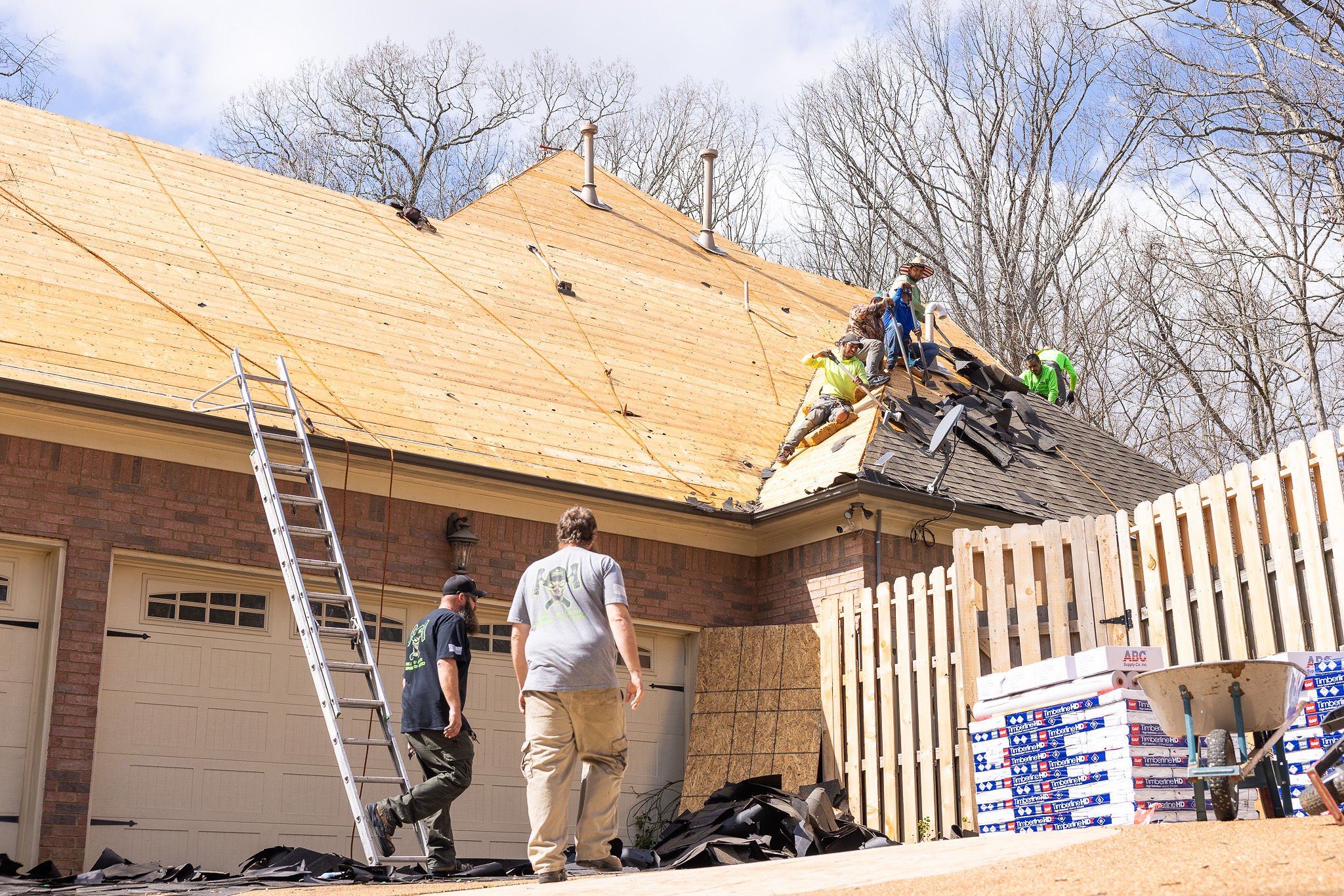
During a roof replacement, Summit states that it removes the existing roof down to the deck, inspects the roof deck, and repairs damaged decking, framing, or flashing found during tear-off.
10. Interior water stains or attic moisture keep returning after repairs
GAF recommends checking an accessible attic for dark stains or streaks on the decking and other visible signs of moisture. If ceiling stains, attic dampness, or water marks keep returning after the roof has been repaired, the original source may not have been fully resolved — or there may be more than one entry point.
Water can travel before it becomes visible indoors, so the stain on the ceiling is not always directly below the roof defect. That is another reason a full inspection is more useful than assuming the nearest shingle is the source.
11. A storm damaged a large part of the roof
Storm damage can be local or widespread. A few missing shingles may be repairable. Damage spread across several slopes, combined with bare shingle areas, damaged flashing, leaks, or deck problems, can make replacement more reasonable. The storm itself does not decide the scope — the condition of the roof does.
Insurance coverage is separate from the repair-versus-replacement decision and depends on the policy, cause of loss, and insurer’s determination. Do not assume visible storm damage automatically means a replacement will be covered.
12. Several parts of the roof system are failing at the same time
This is often the clearest pattern. If shingles are broadly worn, flashing keeps failing, leaks recur, the roof is older, and the deck or roofline is showing problems, another isolated repair may address only one piece of a larger issue. A replacement evaluation makes more sense when several of these problems show up together.
What You Can Safely Check Yourself
You do not need to climb onto the roof to gather useful information. Start from safe, accessible places and note what has changed.
- Walk around the house from ground level and look for missing shingles, broad curling, obvious bare patches, sagging, or debris damage.
- Check gutters and the ground below downspouts for a heavy buildup of asphalt granules, while remembering that some loose granules can be normal.
- Look at ceilings and upper walls for new or returning water stains.
- If your attic is safely accessible, look for dark stains, damp insulation, moisture marks, or daylight where it should not be visible.
- After a storm, photograph visible exterior or interior damage from a safe location and note when the problem first appeared.
- Keep a simple record of past repairs. Dates, locations, and what was fixed can help a contractor see whether the problem is recurring or spreading.
What a Professional Roof Inspection Should Clarify
The inspection should do more than confirm that damage exists. It should explain the scope of the problem and why repair or replacement is the better fit.
- Where water or damage is actually coming from — not just where it became visible indoors.
- Whether the problem is isolated to one area or spread across several roof sections.
- The condition of shingles, flashing, penetrations, gutters, and visible structural elements.
- Whether the roof deck or other underlying layers show moisture damage or deterioration.
- How earlier repairs are holding up and whether the same failure is repeating.
- Whether a targeted repair is likely to address the full problem or would leave other failing areas untouched.
Summit’s roof inspection service currently includes multi-point checks of shingles, flashing, gutters, structural elements, and attic leak signs, and Summit currently advertises free inspections. If you are within Summit’s current service area, an inspection is the most direct way to get a repair-or-replace recommendation based on the actual roof condition.
FAQs About Roof Repair vs. Replacement
Is roof age alone a reason to replace it?
No. Age is useful context, but it does not tell you the roof’s condition by itself. Material, installation, weather exposure, maintenance, and repair history all matter. An older roof with several active problems deserves closer attention than an older roof that is still performing well.
How many roof repairs are too many?
There is no universal number. Look at whether repairs are becoming more frequent, whether they keep appearing in different areas, and whether the roof is developing broader wear at the same time. A pattern of recurring failures is more meaningful than a fixed count.
Can missing or damaged shingles be repaired?
Often, yes — especially when the damage is limited and the surrounding roof is still in good condition. The decision changes when damaged shingles are widespread, the roof covering is brittle, or the repair would leave other failing areas in place.
Does granule loss mean I need a new roof?
Not automatically. Some granules can collect in gutters or downspouts without meaning the entire roof has failed. Large bare patches or widespread granule loss matter more because they show that more of the shingle surface has worn away.
Does a sagging roof need to be replaced?
Sagging is a serious warning sign that should be inspected promptly, but the final scope depends on the cause and how far the damage extends. A professional needs to determine whether the problem involves the deck, framing, trusses, or another part of the structure.
Is storm damage always a roof replacement?
No. Storm damage can range from a small repair to widespread roof-system damage. The decision should be based on how much of the roof was affected, what components were damaged, and whether the underlying structure remains sound.