(901) 235-1803

 3 Min Read
  November 13, 2025
 Roof Repair vs Roof Replacement: How to Know Which Your Home Really Needs
One of the most common questions homeowners ask after a roof inspection is:
“Do I need a repair, or do I need a full replacement?”
The answer depends on several factors — including age, damage type, storm impact, and long-term cost considerations.
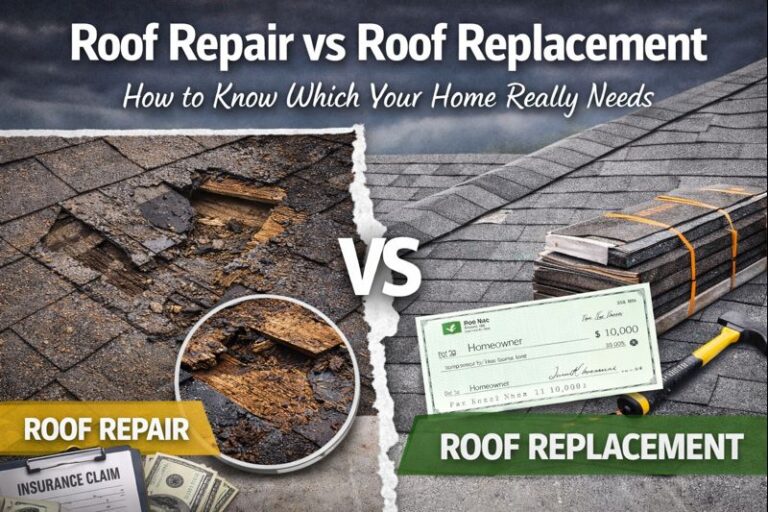
This guide explains the difference between roof repairs and replacements, when each makes sense, and how to make the most financially sound decision for your home.
Understanding Roof Repairs
Roof repairs address localized damage without replacing the entire roofing system.
Repairs are typically recommended when:
- Damage is isolated to a small area
- The roof is relatively new
- Shingles are still structurally sound
- There’s no widespread underlayment damage
Common Roof Repairs
- Replacing missing or damaged shingles
- Resealing flashing
- Repairing minor leaks
- Fixing vent boots
- Securing lifted shingles
Repairs are often faster and lower cost — but not always the best long-term solution.
When Roof Replacement Makes More Sense
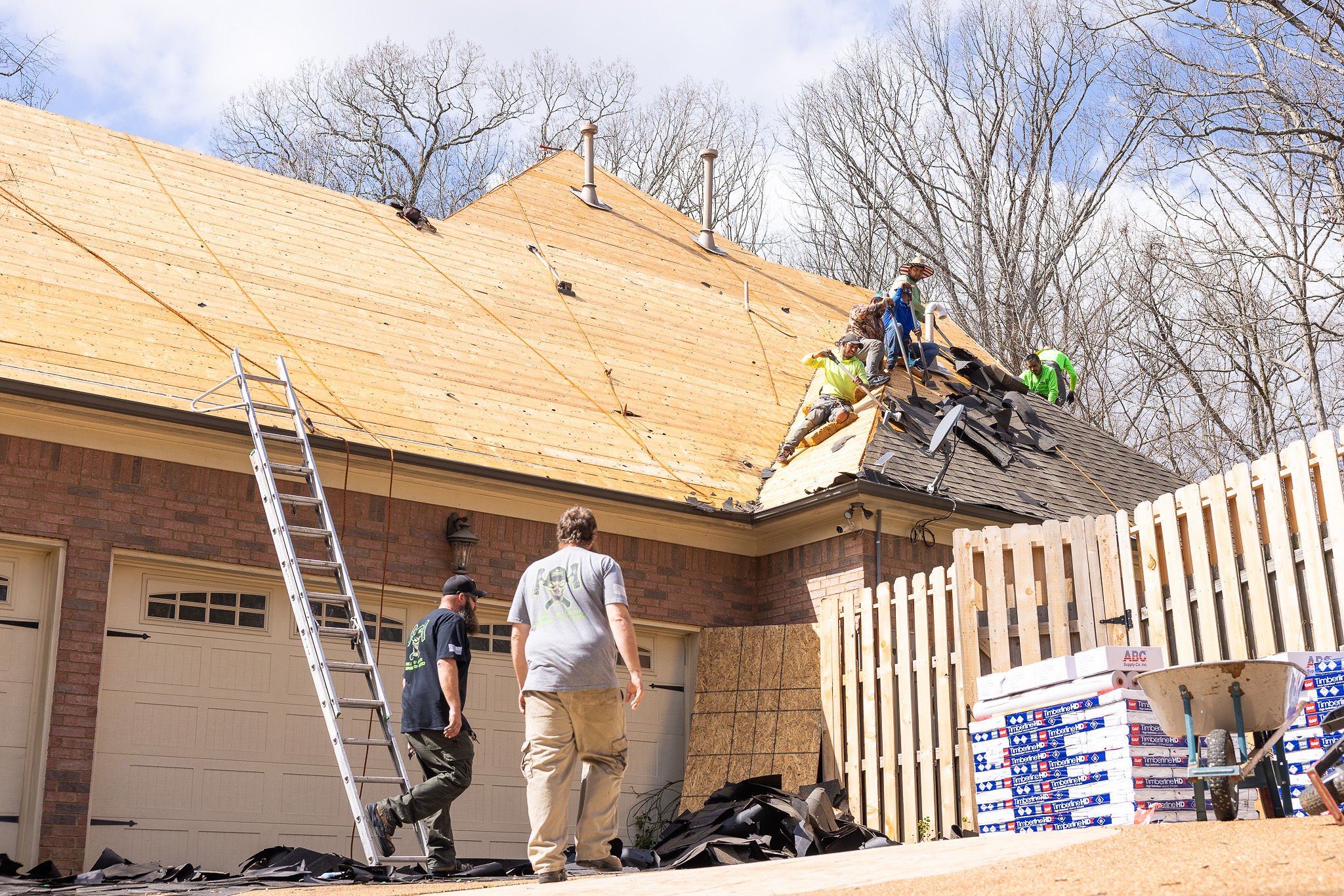
A roof replacement involves removing existing materials and installing a new roofing system.
Replacement is usually recommended when:
- The roof is near or past its lifespan
- Damage is widespread
- Multiple repairs have already been performed
- Insurance covers storm damage
- Structural components are compromised
Replacing a failing roof prevents ongoing repairs and improves energy efficiency, resale value, and protection.
Age Matters More Than Most Homeowners Realize
Even minor damage can justify replacement if the roof is older.
Typical asphalt shingle lifespan:
- 3-tab shingles: 15–20 years
- Architectural shingles: 25–30 years
Once a roof reaches the latter half of its lifespan, repairs become less cost-effective.
How Storm Damage Changes the Equation
Storm damage often impacts more than what’s visible.
High winds and hail can:
- Break adhesive seals
- Weaken underlayment
- Cause shingle fractures
- Shorten remaining lifespan
In many cases, insurance may cover replacement even when the roof isn’t leaking — if damage meets coverage thresholds.
Insurance vs Out-of-Pocket Decisions
Insurance may:
- Cover full replacement
- Cover partial replacement
- Cover repairs only
- Deny claims without proper documentation
A professional inspection ensures:
- Accurate damage assessment
- Claim-ready documentation
- Fair evaluation
Hidden Costs of “Just Repairing It”
Repeated repairs often lead to:
- Higher lifetime cost
- Interior damage risk
- Reduced home value
- Insurance complications
A single replacement can be more affordable than years of patchwork.
Financing Options Can Change the Decision
Many homeowners delay replacement due to upfront cost concerns.
Modern roofing companies offer:
- Flexible financing
- Monthly payment options
- Deferred interest programs
This makes replacement more accessible — even when insurance isn’t involved.
Local Factors Matter
Homes across Tennessee and Arkansas face:
- Heat expansion
- Storm frequency
- Seasonal temperature swings
Local contractors understand which roofing systems perform best regionally and how weather patterns affect longevity.
Making the Right Choice for Your Home
There’s no one-size-fits-all answer. The best decision considers:
- Roof age
- Damage extent
- Insurance eligibility
- Budget
- Long-term plans
A trusted roofing professional provides clear recommendations — not pressure.