(901) 235-1803

 3 Min Read
  January 26, 2026
 If your roof started leaking after a snowstorm, you are not alone — and this is not something to ignore.
Many homeowners assume roof leaks happen during storms. In reality, snow-related roof leaks usually show up after the snow starts melting, often days later. By the time water is dripping into your home or staining your ceiling, damage may already be spreading.
This guide explains why your roof is leaking after snow, what to do immediately, and when it’s time to call a professional roofer.
Why Roofs Leak After Snow (Not During the Storm)
Snow behaves very differently than rain.
When snow accumulates on your roof:
- It sits in place for days
- It melts slowly during warmer daytime temperatures
- It refreezes at night
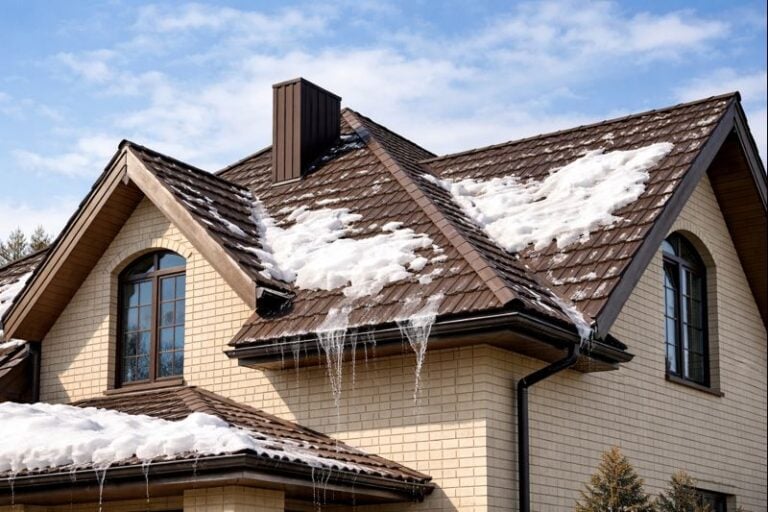
This freeze–thaw cycle forces water into areas it normally wouldn’t reach.
Common problem areas include:
- Roof valleys
- Flashing around chimneys and vents
- Nail penetrations
- Aging or brittle shingles
- Eaves where ice dams form
Once melting snow finds a weak spot, it doesn’t always leak immediately. Water can travel along roof decking, insulation, or framing before finally showing up inside your home.
Is a Roof Leak After Snow an Emergency?
Yes — any active roof leak is an emergency, especially after snow.
Even a small drip can cause:
- Wet insulation (which loses effectiveness)
- Mold growth
- Ceiling drywall damage
- Structural wood rot
- Electrical hazards
If you are seeing:
- Water dripping
- Ceiling stains
- Bubbling paint
- Sagging drywall
You should treat this as urgent and schedule a professional inspection immediately.
What to Do Immediately If Your Roof Is Leaking After Snow
1. Protect the Interior
- Place buckets or containers under active drips
- Move furniture, rugs, and electronics out of the affected area
2. Relieve Ceiling Pressure (If Necessary)
If water is pooling behind drywall, a small drainage hole can help prevent collapse — but only if done safely.
3. Do NOT Climb Onto the Roof
Snow, ice, and wet shingles are extremely dangerous. Roof inspections should be handled by professionals with proper equipment.
4. Call a Local Roofing Professional
A post-snow roof inspection can identify:
- Active leaks
- Ice dam damage
- Hidden moisture intrusion
- Shingle or flashing failures
Why Waiting Makes Snow Damage Worse
Snow-related roof damage often gets worse as temperatures rise.
What starts as a slow drip can quickly become:
- Widespread ceiling damage
- Mold inside walls
- Structural framing issues
Waiting until “it dries up” is one of the most costly mistakes homeowners make after a snowstorm.
Post-Snow Roof Inspections in Your Area
Summit Roofing & Restoration provides post-snow and emergency roof inspections throughout:
- Memphis & West Tennessee
- Jackson, TN
- Nashville & Middle Tennessee
- Jonesboro & Northeast Arkansas
If your roof is leaking after snow, a professional inspection can determine the cause and help prevent further damage.
When to Call a Roofer Immediately
Call right away if you notice:
- Active dripping water
- Ceiling stains spreading
- Multiple leak areas
- Attic moisture or damp insulation
- Ice dams along roof edges
Final Thoughts
Snow-related roof leaks are often hidden, delayed, and serious. If your roof is leaking after snow, the safest next step is a professional inspection to identify the source and stop the damage before it spreads.