(901) 235-1803


 7 Min Read
 November 10, 2026
A hail event rolls through, and within 48 hours your neighborhood has three new roofing companies. They have out-of-state plates, glossy door hangers, and a price that undercuts everyone local. Some of them are legitimate. Many are not, and the homeowner finds out two years later when the leak starts and the phone number is disconnected.
This is what a storm chaser is, how to tell one from a local roofer before you sign anything, and what to do if one already worked on your house.
What a storm chaser actually is
A storm chaser is a roofing crew that follows severe weather rather than living in the market it works. They arrive after hail or wind, sell as many roofs as they can in a few weeks, subcontract or rush the installs, and leave. When your warranty issue surfaces, the business that sold you the roof is often dissolved, out of state, or simply unreachable.
That doesn’t make every out-of-town crew a scam, and it doesn’t make every local roofer honest. What it means is that the questions that protect you are the ones a transient crew cannot answer — and they’re easy to ask.
Nine things to check before you sign
Ask these in the order below. A legitimate contractor will answer all nine without hesitating, and will put most of them in writing.
- A physical local address — not a P.O. box. Ask for it, then look it up. Google the address, check it on Street View, and confirm the business name with your state’s Secretary of State or business registry. A crew working out of a hotel parking lot will stall on this one.
- A state contractor license number. Ask for the number, then verify it yourself on your state’s licensing board website rather than trusting a logo on a truck. Tennessee, Arkansas, Mississippi, Missouri and Kentucky each run their own lookup — if a contractor can’t tell you which license they hold, that’s your answer.
- Proof of insurance — both general liability and workers’ compensation. Ask for a certificate of insurance with your address listed, and call the number on the certificate to confirm it’s active. If an uninsured worker falls off your roof, your homeowners policy can be the one that pays.
- No offer to waive or absorb your deductible. In most states, including Tennessee, a contractor cannot legally cover your deductible — it’s written into your policy and into state insurance law. A crew that offers to “eat it” is either committing insurance fraud on your claim or planning to make it up somewhere you can’t see.
- A written, line-item scope — not a single number on a business card. You should see tear-off, underlayment, ice-and-water shield, decking allowances per sheet, flashing, ridge vent, disposal. Compare line by line, not bottom line. Here’s what a complete estimate should include.
- Who pulls the permit. It should be the contractor, in their name, from your municipality. A crew that asks you to pull a homeowner permit is shifting the liability onto you and skipping the inspection that catches bad work.
- A payment schedule you can live with. No large cash deposit up front, and never full payment before the work is done and inspected. Be wary of anyone who wants a check made out to an individual rather than the company.
- Lien waivers from the supplier and any subcontractors. If the roofer doesn’t pay the shingle supplier, the supplier can file a lien against your house — even though you already paid the roofer. Ask for signed waivers at final payment.
- A written warranty that transfers, plus manufacturer certification. Labor warranty in writing, materials warranty registered in your name, and both transferable if you sell. This is where local matters most: as a GAF Master Elite contractor we can offer the Golden Pledge 50-year warranty, and the certification behind it is tied to a business that will still be here to honor it.
The lines door-knockers use
These phrases are not illegal, but they’re worth slowing down for:
What a local roofer looks like instead
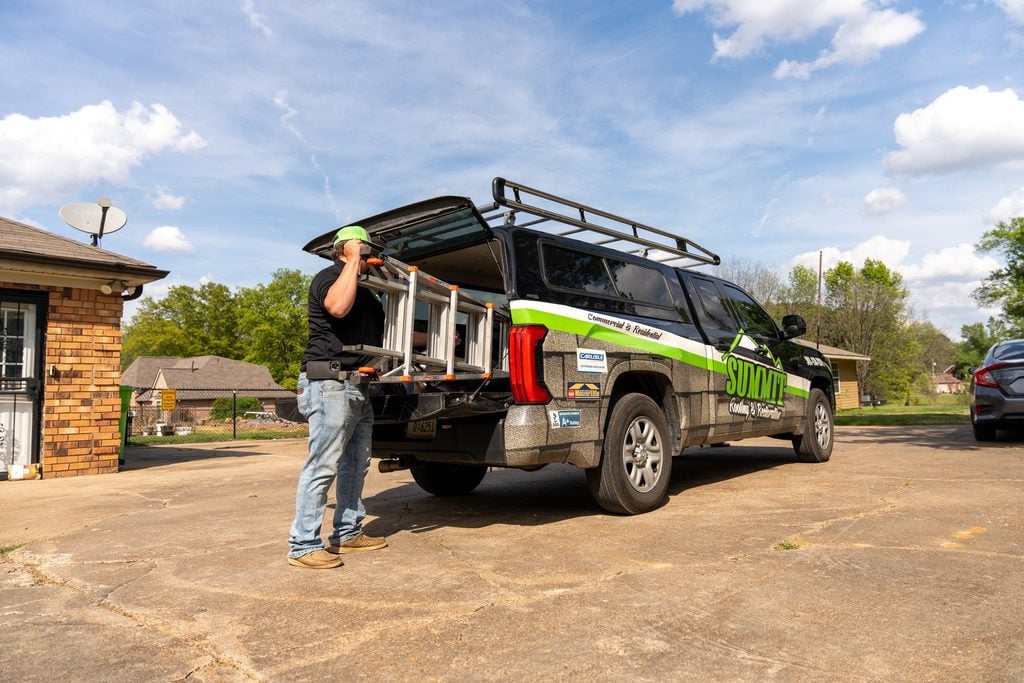
- A crew you can drive to, and a phone number that answers after the storm rush ends.
- Documented photos of your deck and flashing, not stock images.
- A scope that gets supplemented when the adjuster misses something, because we get paid to find it, not to ignore it. See insurance claim assistance.
- Manufacturer certification that requires ongoing training and inspections — ours is GAF Master Elite.
- Warranty registered in your name before we leave the driveway.
- Storm response that includes emergency tarping and a real inspection report, whether or not you end up hiring us.
If a storm chaser already did your roof
You may not have a problem — but you should check three things:
- Warranty status. Was the manufacturer warranty registered to your address? Many transient installs never file it, which means the materials coverage you were promised doesn’t exist. You can call the manufacturer with your address to check.
- Permit and inspection. Look up the permit on your county or city portal. No permit, no inspection — which is a disclosure issue if you ever sell.
- Supplier liens and unpaid subs. Search your county records for a mechanics lien against the property, and confirm any subcontractors were paid.
If any of that comes back wrong, get an independent inspection before the next storm season — we do those free, and a written report will tell you whether the roof is sound or whether you have documentation to pursue.
Frequently asked questions
Is it illegal for a roofer to waive my deductible?
In most states it is, and it can put your claim at risk. Your policy requires you to pay the deductible; a contractor who offers to cover it is doing something you didn’t agree to with your insurer.
Should I ever hire an out-of-town roofer?
Sometimes, yes — a specialist for a particular system can be worth travelling for. The test isn’t where they sleep, it’s whether they’ll give you a local address, a license number, insurance certificates, a line-item scope and a transferable warranty in writing.
Can I verify a contractor’s insurance myself?
Yes. Ask for the certificate of insurance and call the carrier listed on it. Any agent will confirm whether the policy is active and whether it covers residential roofing.
What does a storm chaser cost me?
Often not the price on the contract. It shows up later as unregistered warranties, no permit, unpaid supplier liens, or a second roofer charging to correct the first one’s flashing.
Do you charge for the inspection?
No. Free inspection, written report, and photos of anything we find — whether you hire us or not.
Check before you sign
If someone knocked your door this week, get a second opinion before you sign anything. We’ll get on the roof, photograph what’s actually there, and tell you what can wait and what can’t.
Book a free inspection · Roof replacement · (901) 235-1803
Summit Roofing & Restoration is based in Atoka, Tennessee and roofs homes across Tennessee, Arkansas, Mississippi, Missouri and Kentucky — Memphis, Jackson, Dyersburg, Clarksville, Murfreesboro, Jonesboro, Little Rock, Poplar Bluff and the towns between. See our service area.