(901) 235-1803

 6 Min Read
  January 24, 2026
 Snowstorms can cause serious roof damage in the Mid-South—often in ways homeowners don’t immediately notice.
Because homes in this region are not designed for prolonged snow and ice, winter storms can lead to ice dams, shingle damage, hidden leaks, and long-term structural issues if left unaddressed.
This guide explains how snowstorms damage roofs, what warning signs to look for, and what homeowners should do after a winter storm to protect their home and avoid costly repairs.
How Do Snowstorms Damage Roofs in the Mid-South?
Snowstorms damage roofs through heavy snow load, ice formation, freeze-thaw cycles, and moisture intrusion.
In the Mid-South, fluctuating temperatures cause snow to melt and refreeze repeatedly, which stresses roofing materials and increases the risk of leaks and structural damage. Because many homes are not built for sustained winter conditions, post-storm roof inspections are especially important.
Snowstorm roof damage refers to structural or material issues caused by snow accumulation, ice formation, and freeze-thaw cycles that allow moisture to penetrate roofing systems.
Why Are Snowstorms Especially Dangerous for Roofs in the Mid-South?
Homes in the Mid-South are typically designed for milder winters, not extended snow or ice events. As a result:
- Snow melts and refreezes more frequently
- Ice accumulates in areas not designed for drainage
- Small roof vulnerabilities worsen quickly
When temperatures rise above freezing during the day and drop again at night, roofs experience thermal expansion and contraction. This repeated movement stresses shingles, flashing, sealants, and roof decking, increasing the likelihood of damage.
What Types of Roof Damage Are Caused by Snowstorms?
1. Heavy Snow Load Stress
Snow becomes significantly heavier when compacted or mixed with ice. Excess weight can:
- Stress roof decking and trusses
- Cause sagging in weakened areas
- Worsen existing structural issues
While roof collapse is uncommon, long-term structural damage often goes unnoticed until warmer months.
2. Ice Dams and Water Backup
Ice dams form when snow melts on warmer sections of the roof and refreezes at the edges. This creates a barrier that prevents proper drainage.
When ice dams form:
- Water becomes trapped behind the ice
- Moisture is forced under shingles
- Roof decking and insulation can become saturated
Ice dam damage is one of the most common and destructive winter roofing issues following snowstorms.
3. Shingle Damage from Freeze-Thaw Cycles
Shingles are designed to expand and contract, but repeated freeze-thaw cycles can:
- Crack or split shingles
- Break adhesive seals
- Cause shingles to lift or detach
Once shingles lose their seal, the roof becomes more vulnerable to wind-driven moisture and future storms.
4. Roof Leaks That Appear Days or Weeks Later
One of the most challenging aspects of snowstorm roof damage is delayed leaks.
Water may enter the roofing system slowly and remain hidden until:
- Insulation becomes saturated
- Drywall absorbs moisture
- Mold growth or staining appears
By the time interior signs are visible, damage has often progressed significantly.
5. Flashing and Vent Penetration Failures
Roof penetrations—such as chimneys, vents, skylights, and transitions—are especially vulnerable during snowstorms.
Ice movement and snow shifting can:
- Pull flashing loose
- Crack sealants
- Create small entry points for moisture
These issues are difficult to detect without a professional roof inspection.
What Are the Warning Signs of Roof Damage After a Snowstorm?
After the storm passes and conditions are safe, homeowners should watch for:
- Ceiling or wall water stains
- Musty or damp odors
- Missing or lifted shingles
- Uneven icicle formation
- Sagging rooflines or visible dips
Important: Never climb onto your roof after a snowstorm. Ice-covered surfaces are extremely dangerous.
Why You Shouldn’t Delay Addressing Snowstorm Roof Damage
Delaying roof inspections after winter weather can lead to:
- Mold growth inside walls and insulation
- Rotting roof decking
- Increased repair costs
- Complications with insurance claims
What begins as minor snowstorm damage can quickly turn into a full roof replacement if not addressed early.
Does Homeowners Insurance Cover Snowstorm Roof Damage?
In many cases, homeowners insurance does cover snowstorm-related roof damage. Coverage depends on:
- The cause of the damage
- Your specific policy
- How quickly damage is reported
Insurance providers may deny claims if damage is attributed to neglect or pre-existing issues. Prompt inspections and documentation are critical.
A professional roof inspection can provide:
- Photo documentation
- Clear damage assessment
- Support during the insurance claims process
How Do Professional Roof Inspections Help After a Snowstorm?
A post-storm roof inspection can identify issues that are not visible from the ground, including:
- Hidden leaks
- Subtle shingle damage
- Ice dam impact
- Structural concerns
At Summit Roofing & Restoration, we regularly inspect roofs after snowstorms and winter weather events across the Mid-South. Many of the issues we uncover—such as ice dam damage and hidden moisture intrusion—are not immediately visible and often go unnoticed until interior damage appears.
Our inspections are thorough, honest, and focused on helping homeowners make informed decisions.
What Should Homeowners Do After a Snowstorm?
After a snowstorm, homeowners should:
- Avoid walking on icy roofs
- Check ceilings, walls, and attic areas
- Document any visible changes
- Schedule a professional roof inspection
Early action can prevent minor issues from becoming expensive repairs.
How Can Homeowners Reduce Future Snowstorm Roof Damage?
While no roof is completely storm-proof, preventative steps can reduce risk:
- Maintain proper attic insulation and ventilation
- Address small roof repairs before winter
- Ensure roof penetrations are properly sealed
- Schedule routine roof inspections
Preparation is especially important in regions where snowstorms are unpredictable but impactful.
When Should You Schedule a Roof Inspection After a Snowstorm?
Homeowners should consider scheduling an inspection if:
- Their home experienced significant snow or ice buildup
- Interior or exterior warning signs appear
- The roof is over 10 years old
- An insurance claim may be filed
Even if no issues are immediately visible, peace of mind and early detection can save thousands in repairs.
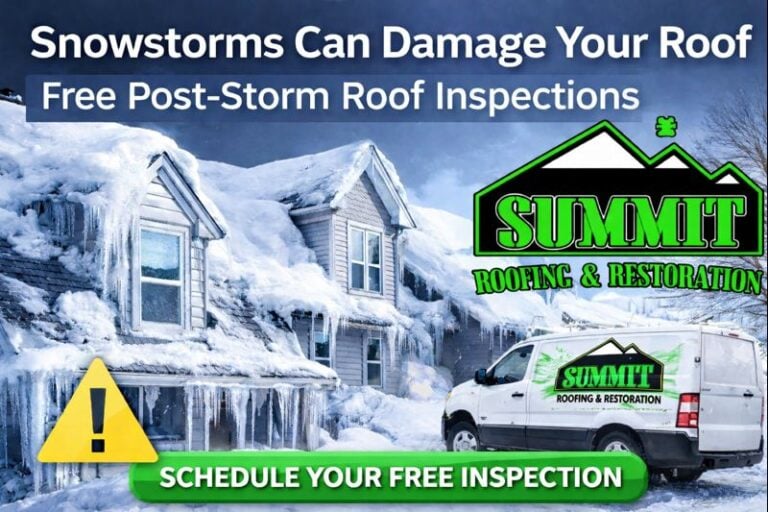
Schedule a Free Post-Storm Roof Inspection
Snowstorms can cause roof damage you can’t always see—but ignoring it can lead to costly repairs later.
Homeowners across Tennessee, Arkansas, Mississippi and Kentucky can schedule a free post-storm roof inspection with Summit Roofing & Restoration. Our team is available to assess storm-related damage and help you determine next steps.
👉 Schedule your free post-storm roof inspection
Final Reminder
Concerned about snowstorm damage to your roof?
Don’t wait for leaks to appear.
Contact Summit Roofing & Restoration to schedule your inspection or estimate.