(901) 235-1803

 15 Min Read
  September 1, 2026
 Roof replacement cost is driven by the roof itself—not just the square footage of the house. The biggest pieces are the actual roof surface area, pitch and complexity, the roofing system you choose, tear-off and disposal, labor and local requirements, plus the condition of the decking and other components under the old roof. Some of that scope can be measured before work begins. Other conditions may not be fully visible until the existing roof comes off.
That is why a useful estimate should do more than give you a total. It should make the scope clear enough that you can compare what is included, what is excluded, and how work discovered during tear-off will be handled.

The Biggest Roof Replacement Cost Drivers
There is no single formula that produces an accurate price for every home. GAF identifies roof size, materials, slope or pitch, and location as major cost factors. Owens Corning also points to roof square footage, slope, decking, underlayment, vents, flashing, and underlying damage as parts of the project that can change the final scope.
| Cost driver | Why it changes the estimate | What to look for in a quote |
|---|---|---|
| Actual roof area | More roof surface means more roofing material and usually more labor. | Measured roof area or roofing squares, not only the home’s living-area square footage. |
| Pitch and complexity | Steep slopes and complicated roof shapes can add surface area, setup, safety requirements, cuts, and detail work. | Pitch/slope and the major roof features included in the measurement. |
| Material and roof system | The visible roof covering is only part of the system; underlayment, flashing, ventilation, and other components matter too. | Exact product/system choices and what related components are included. |
| Tear-off and disposal | Removing the old roof and handling debris adds labor and disposal scope. | Whether removal, disposal, and cleanup are included. |
| Labor, access and location | Access, project difficulty, local labor conditions, codes, and permit requirements can vary. | Who handles permits, access assumptions, and any clearly stated exclusions. |
| Existing roof and deck condition | Damage under the roofing may require added work once the old materials are removed. | How damaged decking, framing, or flashing will be documented and priced if found. |
Your Roof Is Not the Same as Your Home’s Square Footage
A 2,000-square-foot house does not automatically have a 2,000-square-foot roof. Living-area square footage can include multiple floors, while roof surface area follows the shape, footprint, overhangs, attached spaces, and slope of the roof. Owens Corning specifically distinguishes home square footage from roof square footage when explaining replacement costs.
This is also why online calculators based only on the home’s listed square footage can miss the mark. A professional measurement can account for the roof planes, pitch, eaves, rakes, and other geometry that actually needs to be covered.
Pitch and Roof Complexity Affect Both Area and Labor
Roof pitch describes how steeply the roof rises. A steeper roof can have more surface area than a flatter roof over a similar footprint, and it can also take more setup, safety equipment, and labor to work on. GAF and Owens Corning both identify steepness as a factor that can increase a replacement estimate.
Shape matters too. Two roofs with similar total area can require very different amounts of cutting, flashing, staging, and detail work.
- Valleys where roof planes meet
- Dormers and multiple roof levels
- Chimneys, skylights, vents, and other penetrations
- Numerous hips, ridges, and transitions
- Limited access for crews, materials, or debris removal
There is no universal “steep roof surcharge” that applies to every contractor and every job. What matters is whether the estimate clearly reflects the measured pitch and the actual complexity of the roof.
Material Choice Changes More Than the Shingle Price
The roof covering you see from the street is only one part of a replacement. Your material choice changes the product cost, but the total scope can also include underlayment, flashing, ventilation, fasteners, edge components, and other parts of the roofing system. Product requirements and warranty options can vary by system.
| Roof-system item | What it does | Why it can affect cost |
|---|---|---|
| Roof covering | The outer material that sheds weather, such as asphalt shingles or metal panels. | Different products and systems have different material and installation requirements. |
| Underlayment | A protective layer installed beneath the primary roof covering. | The type and amount used can vary with the roof system and project requirements. |
| Flashing | Directs water away from transitions and penetrations such as walls, chimneys, and vents. | Existing flashing condition and replacement scope can change the work involved. |
| Ventilation | Helps manage attic airflow as part of the roof/attic system. | Existing conditions and the selected roof system may call for different ventilation work. |
| Decking | The wood substrate beneath the roofing materials. | Damaged sections can add material and labor if replacement is needed. |
If you are comparing asphalt shingles with metal roofing options, compare complete systems and installation scope rather than the surface material alone.
Tear-Off, Disposal and Existing Layers Add Scope
A roof replacement is not only an installation job. Removing the existing roof, moving debris off the property, protecting the work area, and cleaning up all take time and labor.
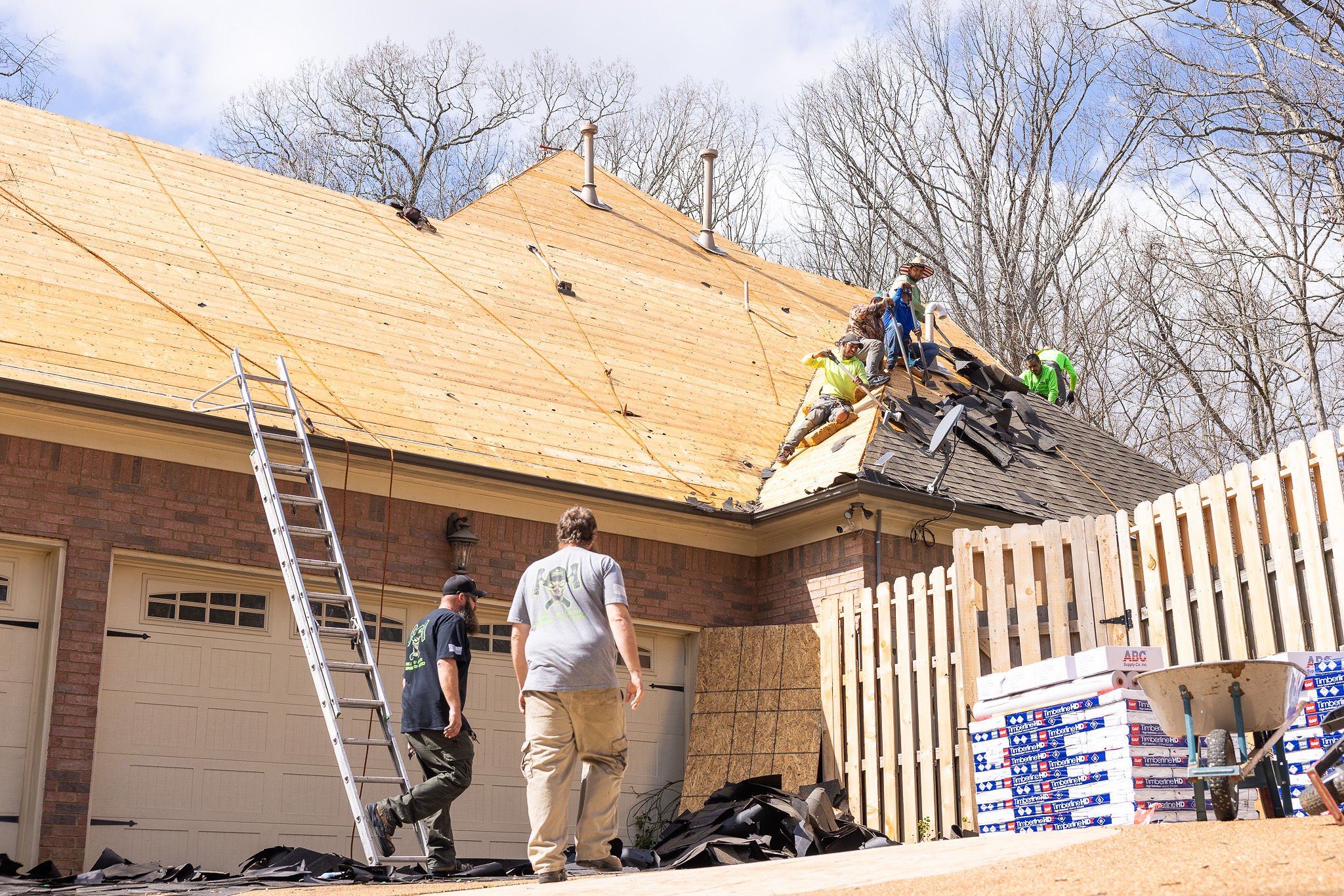
For Summit Roofing & Restoration projects, the current roof replacement service page describes a full tear-off to the deck, followed by an inspection of the substrate before the new roofing system is installed. That creates an important dividing line in the estimate: what can be seen and measured beforehand versus what may only become clear after the old roof is removed.
Hidden Conditions Can Change the Scope After Tear-Off
A careful roof inspection can show a great deal before replacement starts, but it cannot reveal every hidden condition. The wood decking under the roofing, parts of the framing, and some flashing details may be partly hidden until tear-off.
Summit’s current replacement page says damaged decking, framing, or flashing found during tear-off can be repaired before the new roof is installed. Owens Corning likewise notes that underlying wood or structural damage can add labor and materials to a replacement project.
What is usually known before work—and what may remain contingent
| Scope item | Usually measurable or visible before work? | May remain contingent? | Question to ask |
|---|---|---|---|
| Roof area and pitch | Yes, usually measurable before work starts. | Usually not, once measurements are confirmed. | What roof area and pitch did you use for this estimate? |
| Selected roofing system | Yes, once products and options are chosen. | Only if the selection changes. | Which products and components are included? |
| Tear-off and disposal | Usually yes when the removal scope is known. | Can vary if unexpected layers or access issues are discovered. | What removal and disposal work is included? |
| Decking condition | Some problems may be visible from the roof or attic. | Yes. Concealed damage may appear after tear-off. | How will damaged wood be documented and priced if found? |
| Framing or concealed flashing | Sometimes partly visible during inspection. | Yes, depending on access and existing construction. | How will added structural or flashing work be approved before it proceeds? |
| Permits/local requirements | Often researchable before work. | Requirements can vary by jurisdiction and scope. | Who is responsible for permits and related fees if required? |
Labor, Access, Location and Local Requirements Also Matter
Labor is tied to the roof and jobsite conditions. A steep or complicated roof can take longer to stage and install. Tight access can make material delivery and debris handling harder. Geography also affects labor conditions, and GAF notes that climate, local building codes, and permit requirements can influence cost.
- Ask whether the quote assumes normal access for crews and debris removal.
- Confirm who is responsible for any required permits or inspections.
- Treat permit fees and code requirements as local—not national—numbers.
- If a quote contains unusual access or setup charges, ask what roof condition or property constraint is driving them.
Upgrades and Add-Ons Can Expand the Project
Some homeowners use roof replacement as the right time to address connected work. Summit’s replacement page says projects can include insulation or attic-ventilation improvements, gutters, skylights, and energy-efficient material options. Those are not automatic requirements for every roof, but they can expand the scope when they are appropriate for the home and selected by the homeowner.
Keep optional work separate from the core replacement when you compare estimates. That makes it easier to see whether two totals differ because of the roof itself or because one contractor included additional upgrades.
How to Compare Roof Replacement Estimates
Start with the written scope, not the bottom-line number. If two estimates are not pricing the same work, comparing totals alone will not tell you which is actually more complete or more appropriate for your roof.
- Measured roof area or roofing squares, plus pitch/slope where relevant
- Exact roofing material or system being installed
- Tear-off and removal of existing roofing
- Debris disposal and jobsite cleanup
- Underlayment and other required system components
- Flashing work around roof-to-wall areas, chimneys, vents, and other penetrations
- Ventilation work included in the scope
- How damaged decking or other concealed wood will be documented and priced if discovered
- Who handles permits or local inspection requirements when applicable
- Warranty information tied to the products and installation scope
- Optional upgrades shown separately from the base replacement
- Payment schedule and how any added work must be approved
- Clear exclusions so you know what is not included
If you are still unsure whether the scopes match, use the contractor’s estimate as a checklist for questions. A clear contractor should be able to explain where the numbers come from and what would need to happen for the scope to change.
A National Average Is Context, Not Your Project Price
Published national roof-cost figures can be useful for rough context, but reputable sources do not all report the same number because their assumptions, roof sizes, materials, time periods, and methodologies differ. That’s why a national average—or a simple price-per-square-foot estimate—should not replace a measured, roof-specific scope.
For budgeting, use general benchmarks as a starting point. For an actual decision, rely on a written estimate that reflects your roof’s measurements, selected system, condition, and local requirements.
Roof Replacement Cost FAQs
Is roof replacement cost based on house square footage?
Not directly. Home square footage and roof surface area are different measurements. The roof may include overhangs, garages, attached areas, and sloped surfaces that are not represented by the home’s listed living area. Contractors typically estimate from the roof itself, often using roofing squares, where one square equals 100 square feet of roof surface.
Does a steeper roof cost more to replace?
It can. A steeper roof can increase the actual roof surface area and may require more labor, setup, or safety equipment. Roof shape matters too, so pitch should be considered alongside valleys, dormers, penetrations, and other details rather than treated as a single universal surcharge.
Can roof replacement cost change after tear-off?
Yes, if concealed conditions are discovered. Damage to decking, framing, or flashing may not be fully visible before the old roofing is removed. Before signing a contract, ask how the contractor will document, price, and obtain approval for work that was not part of the original visible scope.
What should a roof replacement estimate include?
A useful estimate should identify the measured roof scope, selected roofing system, tear-off and disposal, key components such as underlayment and flashing, cleanup, and any important exclusions. It should also explain how damaged decking or other contingent work will be handled if it is found.