(901) 235-1803

 6 Min Read
  December 5, 2025
 How Long Does a Roof Last?
One of the most common questions homeowners ask is: how long does a roof last?
The answer depends on several factors, including the roofing material, installation quality, local climate, and maintenance habits.
Understanding your roof lifespan is critical for preventing unexpected leaks, protecting your home’s value, maintaining insurance eligibility, and avoiding costly emergency repairs. Many roofs fail gradually — long before visible leaks appear — which is why knowing when your roof is nearing the end of its useful life matters.
This guide explains roofing material lifespan, what shortens roof longevity, warning signs of roof failure, and when roof age alone may justify replacement.
Average Roof Lifespan by Material
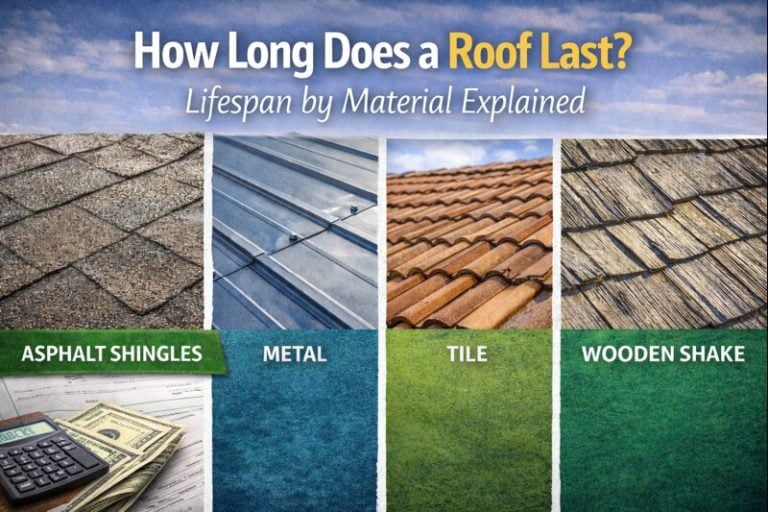
Different roofing materials are designed to last different lengths of time. Below is a breakdown of average roof lifespans homeowners can expect under normal conditions.
Architectural Asphalt Shingle Lifespan
Average lifespan: 25–30 years
Architectural (or dimensional) asphalt shingles are the most common residential roofing material in the U.S. They offer a balance of affordability, durability, and curb appeal.
Why homeowners choose architectural shingles:
- Thicker and stronger than traditional shingles
- Better wind resistance
- More attractive, dimensional appearance
- Cost-effective replacement option
While manufacturers may advertise “lifetime” warranties, real-world roof longevity is typically closer to 25–30 years, depending on climate and ventilation.
3-Tab Asphalt Shingle Lifespan
Average lifespan: 15–20 years
3-tab shingles are thinner and less durable than architectural shingles. They are more susceptible to wind uplift, heat damage, and granule loss.
Key considerations:
- Shorter roof lifespan
- More frequent repairs
- Often flagged by insurance carriers sooner
- Less resistance to severe weather
If your home has 3-tab shingles approaching 15 years old, it’s wise to begin planning for roof age replacement, even if leaks haven’t started yet.
Metal Roofing Lifespan
Average lifespan: 40–50 years
Metal roofs are known for exceptional roof longevity. While the upfront cost is higher, metal roofing often outlasts multiple asphalt roofs.
Benefits of metal roofing:
- Extremely long lifespan
- Resistant to rot, insects, and fire
- Reflects heat, improving energy efficiency
- Performs well in extreme weather
With proper installation and minimal maintenance, metal roofing can remain structurally sound for decades.
What Affects Roof Lifespan?
Even the best roofing materials won’t reach their full lifespan if certain conditions shorten their durability. The following factors significantly impact how long a roof lasts.
Heat and UV Exposure
Constant exposure to sunlight breaks down roofing materials over time. In warmer climates, UV rays accelerate shingle aging, causing:
- Premature brittleness
- Granule loss
- Cracking and curling
Homes with limited shade or southern-facing roof slopes often experience faster roof wear.
Poor Attic Ventilation
Improper ventilation traps heat and moisture in the attic, which can:
- Overheat shingles from below
- Cause moisture buildup and mold
- Shorten roof lifespan by years
A well-ventilated attic is one of the most effective ways to extend roof longevity.
Improper Installation
Even high-quality materials can fail early if installed incorrectly. Common installation issues include:
- Incorrect nailing patterns
- Poor flashing installation
- Inadequate underlayment
- Skipped ventilation components
Installation quality plays a major role in determining actual roofing material lifespan.
Deferred Maintenance
Ignoring minor issues allows them to grow into major failures. Routine roof maintenance helps prevent:
- Small leaks turning into structural damage
- Flashing deterioration
- Rotting decking
Regular inspections can significantly extend how long a roof lasts.
Tree Debris and Moisture Retention
Overhanging trees drop leaves and debris that trap moisture on the roof surface. This leads to:
- Algae growth
- Shingle deterioration
- Premature aging
Keeping the roof clear of debris improves long-term roof performance.
Signs Your Roof Is Near the End of Its Lifespan
Knowing the warning signs of roof failure helps homeowners avoid surprise replacements. Common indicators include:
Granule Loss
Excessive granules in gutters or downspouts signal shingle deterioration and reduced UV protection.
Curling or Brittle Shingles
Shingles that curl, crack, or break easily are often near the end of their usable life.
Frequent Repairs
If repairs are becoming more frequent or costly, replacement may be more economical.
Energy Inefficiency
An aging roof often contributes to higher heating and cooling costs due to poor insulation and ventilation performance.
Visible Aging Patterns
Uneven coloration, sagging areas, or widespread wear indicate advanced roof aging.
Why Roof Age Matters — Even Without Leaks
A common misconception is that a roof is fine as long as it isn’t leaking. In reality, roof age replacement decisions are often made before leaks occur.
Structural Failure Comes First
Roofs frequently fail structurally before water enters the home. Underlayment deterioration, weakened decking, and compromised fasteners may exist long before interior damage is visible.
Insurance Considerations
Many insurance companies factor roof age into:
- Coverage eligibility
- Claim approvals
- Policy renewals
Older roofs may be denied coverage or excluded from storm claims, even if no leaks are present.
Real Estate Impact
If you plan to sell your home, roof age can:
- Reduce buyer confidence
- Affect inspection results
- Lower resale value
A newer roof is a strong selling point and often increases home value.
Professional Inspections Extend Roof Life
Routine roof inspections are one of the best ways to extend roof lifespan. A professional inspection can identify:
- Early material failure
- Ventilation issues
- Flashing damage
- Storm-related wear
Most experts recommend a roof inspection:
- Once per year
- After major storms
- When the roof reaches 10–15 years old
Catching small problems early prevents premature roof replacement.
When Should You Replace Your Roof?
There is no universal replacement age, but general guidelines include:
- 3-tab shingles: Begin planning replacement at 15 years
- Architectural shingles: Monitor closely after 20–25 years
- Metal roofing: Inspect regularly after 40 years
If your roof is approaching these benchmarks, scheduling a professional evaluation helps you make informed decisions.
Final Thoughts: Understanding Roof Lifespan Protects Your Home
So, how long does a roof last?
The answer depends on material, installation, environment, and maintenance — but every roof has a finite lifespan.
Understanding roof lifespan, recognizing warning signs, and planning replacement proactively protects your home, finances, and peace of mind.
If your roof is aging or showing signs of wear, a professional inspection is the smartest next step to determine whether repair or replacement is the best option.