(901) 235-1803

 6 Min Read
  January 21, 2026
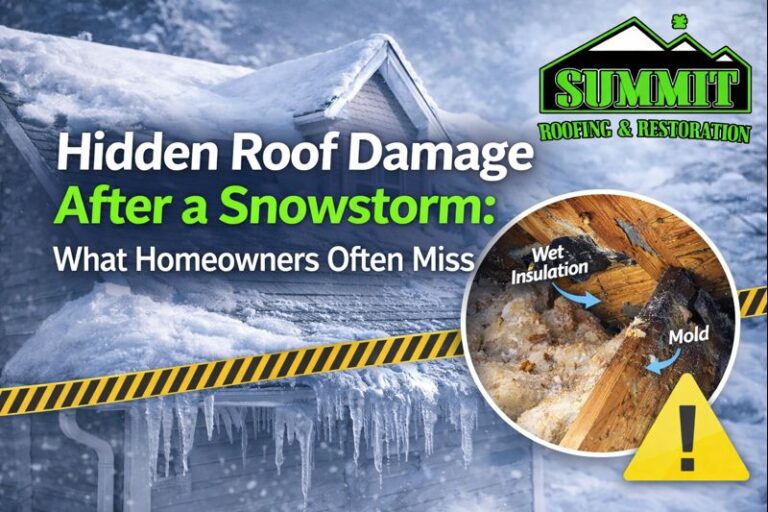
 Snowstorms don’t just disrupt travel and daily routines — they can quietly compromise the integrity of your roof. One of the biggest challenges homeowners face after winter weather is hidden roof damage after a snowstorm.
Unlike hail or wind damage, snow-related roof issues often develop slowly and remain out of sight until significant problems appear inside the home.
Across Tennessee, Mississippi, Kentucky, and Arkansas, snowstorms may be less frequent than in northern states, but that often makes their impact more severe. Homes in these regions are not typically designed for prolonged snow and ice, which increases the risk of moisture intrusion, insulation damage, and structural deterioration.
This guide explains what hidden roof damage is, how it forms after snowstorms, where it commonly occurs, and why early inspections are critical for homeowners throughout the Mid-South.
What Is Hidden Roof Damage After a Snowstorm?
Hidden roof damage after a snowstorm refers to moisture intrusion or structural issues that are not immediately visible from the ground. This damage develops beneath shingles, roof decking, flashing, or attic insulation, often without obvious exterior warning signs.
Snow-related damage is especially deceptive because:
- Shingles may still appear intact
- Leaks may not show up for days or weeks
- Moisture can travel far from its entry point
Left unaddressed, hidden damage can worsen over time, leading to mold growth, wood rot, and costly repairs.
Why Snowstorm Roof Damage Isn’t Always Visible
Snowstorms affect roofs differently than hail or high winds. Instead of sudden impact damage, snow causes gradual moisture penetration through freeze-thaw cycles.
Here’s why damage is often missed:
- Snow melts slowly and refreezes repeatedly
- Water seeps into tiny openings around shingles and flashing
- Moisture spreads through insulation and framing
- Damage develops underneath otherwise “normal-looking” roofing materials
In many cases, homeowners don’t realize there’s a problem until they notice interior symptoms — long after the storm has passed.
How Moisture Enters Roofing Systems After Snowstorms
Moisture intrusion is the root cause of most hidden roof damage after snowstorms. Common entry points include:
Lifted or Weakened Shingles
Freeze-thaw cycles can loosen shingle seals. Once lifted, shingles allow melting snow and ice to penetrate beneath the roofing surface.
Cracked or Shifted Flashing
Flashing around chimneys, vents, skylights, and roof transitions can crack or separate due to temperature changes, creating gaps for water entry.
Ice Dam Backup
Ice dams prevent proper drainage, forcing water to back up under shingles and into the roof deck and attic space.
Roof Penetrations
Vents, exhaust pipes, and other penetrations rely on seals that can degrade during winter weather, allowing moisture intrusion.
Aging Vent Seals
Rubber or sealant materials can harden and crack in freezing temperatures, especially on older roofs.
Once moisture enters the system, it doesn’t stay in one place — it spreads through insulation, wood framing, and drywall before becoming visible indoors.
Common Areas Where Hidden Roof Damage Occurs
Professional roof inspections frequently uncover hidden damage in areas homeowners rarely see or access:
Attic Insulation
Wet insulation loses effectiveness and can hold moisture for extended periods, increasing the risk of mold.
Roof Decking
Prolonged moisture exposure can cause wood decking to soften, rot, or delaminate.
Chimney and Vent Flashing
These areas experience significant temperature changes and are common failure points after snowstorms.
Roof Edges and Eaves
Ice dam activity and freeze-thaw stress often concentrate along roof edges.
Valleys and Transitions
Roof valleys channel water and snowmelt, making them vulnerable to hidden leaks.
Because these areas are difficult to inspect safely, damage often goes unnoticed without professional tools and experience.
Signs Hidden Roof Damage May Already Be Present
Even when damage isn’t visible from the outside, homeowners may notice subtle interior warning signs, including:
- Musty or damp odors
- Subtle ceiling or wall discoloration
- Increased indoor humidity
- Warped drywall or bubbling paint
- Mold growth in ceilings, walls, or attic areas
By the time these signs appear, moisture has often been present for some time.
Why Waiting for a Visible Leak Is Risky
One of the most common mistakes homeowners make is waiting until water is actively dripping inside the home.
By that point:
- Insulation is usually saturated
- Mold may already be forming
- Roof decking may be compromised
- Repairs are more extensive and expensive
Hidden roof damage after a snowstorm rarely resolves on its own. Early detection is the most effective way to limit long-term damage and costs.
Why Homes in the Mid-South Are Especially Vulnerable
In Tennessee, Mississippi, Kentucky, and Arkansas, winter weather often brings fluctuating temperatures rather than prolonged deep freezes. These conditions increase the likelihood of freeze-thaw cycles, which are especially damaging to roofs.
Additionally:
- Many homes lack winter-optimized attic ventilation
- Roofing materials may not be rated for extended ice exposure
- Snowstorms are often followed by rapid melting
This combination makes hidden damage more likely after even a single significant snow event.
For a broader explanation of winter risks, review our guide on snowstorm roof damage and how winter weather impacts Mid-South homes.
Importance of Early Roof Inspections After a Snowstorm
Professional roof inspections are the most reliable way to detect hidden roof damage after snowstorms. A thorough inspection typically includes:
- Shingle condition assessment
- Flashing and penetration checks
- Roof edge and valley evaluation
- Attic moisture inspection
- Insulation and ventilation review
Experienced inspectors know where snowstorm damage is most likely to occur and how to identify subtle warning signs before they escalate.
Insurance Considerations for Hidden Roof Damage
Many homeowners are surprised to learn that insurance claims can be denied if damage is discovered too late or attributed to long-term neglect.
Early inspections help by:
- Establishing storm-related timing
- Documenting damage before it worsens
- Providing photos and written assessments
If an insurance claim becomes necessary, proper documentation can make the process smoother and reduce disputes.
When Should You Schedule a Roof Inspection?
You should schedule a professional roof inspection if:
- Your home experienced snow or ice accumulation
- Icicles or ice dams formed along the roof edge
- Interior warning signs are present
- Your roof is more than 10 years old
- You plan to file an insurance claim
Even if everything appears normal, peace of mind is worth the inspection.
Roofing Services After a Snowstorm Across the Mid-South
At Summit Roofing & Restoration, we provide post-storm roofing services for homeowners throughout:
- Tennessee
- Mississippi
- Kentucky
- Arkansas
Our team understands how snowstorms uniquely impact roofs in this region and focuses on identifying hidden damage before it becomes a costly problem.
Schedule a Free Post-Storm Roof Inspection
Hidden roof damage after a snowstorm can lead to serious issues if left unchecked — but early action makes all the difference.
If your home experienced snow or ice, Summit Roofing & Restoration offers free post-storm roof inspections to identify hidden damage and explain your options clearly.
👉 Schedule your inspection today
👉 Get peace of mind before small issues turn into major repairs
Final Takeaway
Snowstorms don’t always leave visible damage behind — but that doesn’t mean your roof escaped unscathed. Hidden roof damage after a snowstorm is common, especially in the Mid-South, and early inspections are the best way to protect your home.