(901) 235-1803

 16 Min Read
  September 1, 2026
 If a storm, falling branch, or sudden leak has damaged your roof or let water into your home, protect people before property. Stay away from damaged ceilings and electrical hazards, don’t climb onto a wet or damaged roof, and contact emergency services or the utility first if there is an immediate life-safety hazard. Once the area is safe, temporary stabilization such as professional tarping can help reduce further weather exposure while the roof is inspected and permanent repair is planned.
Is This a Roof Emergency?
A roof problem becomes urgent when water is actively entering the building, the roof has a large opening, heavy debris has struck the roof, or there may be a structural or electrical safety risk. The right first call depends on what is happening right now.
| Situation | What to do now | Who to call |
|---|---|---|
| Fire, smoke, sparks, a downed power line, or apparent structural instability | Leave the affected area and keep people away. Do not touch debris or electrical equipment. | 911 or the utility first, as appropriate |
| A tree or heavy debris is on the roof | Stay clear of the damaged area. Do not climb up or try to remove the debris yourself. | Emergency roofer after the site is safe; utility if lines are involved |
| Active leak, missing roofing, or an opening exposed to weather | Move people and belongings away from the leak if it is safe. Do not access the roof. | Emergency roofer |
| Storm damage with no active leak and no immediate hazard | Document what you can see from a safe location and arrange an inspection. | Storm-damage roofing contractor |
| Old stain, minor defect, or non-active repair issue | Schedule a standard roof inspection or repair rather than treating it as an emergency. | Roof repair contractor |
If the problem is not urgent, Summit’s roof repair service is the better path. If you are unsure whether the building is safe to occupy, keep people out of the affected area and treat it as a safety issue rather than trying to diagnose it from inside the home.
What Should You Do First After Sudden Roof Damage?
The first few minutes are about keeping people away from danger and preventing avoidable interior damage without putting anyone on the roof.
- Move people and pets away from the damaged room, especially if the ceiling is sagging, bulging, cracked, or shedding material.
- Call 911 or the utility first if there is fire, smoke, sparking, a downed line, or another immediate life-safety hazard.
- Don’t climb onto the roof. Wet surfaces, wind, loose materials and hidden damage can make post-storm roof access dangerous.
- If it is safe to do so, place a container under a simple drip and move furniture, electronics and valuables away from the water. Do not stand under or disturb a sagging ceiling.
- Take photos or video from a safe location before cleanup or temporary work changes what the damage looks like.
- Note when the damage happened and keep receipts, estimates and messages related to emergency work.
- Once immediate hazards are handled, call a roofing contractor to assess the opening, leak or storm damage and determine whether temporary stabilization is needed.
When to Leave the Area and Call Emergency Services or the Utility
Stay away from downed power lines and objects touching them. Ready.gov advises reporting fallen power lines and trees after severe storms. If the building appears unstable, there is a fire or electrical hazard, or local officials tell you to evacuate, leave the affected area and follow emergency instructions. A roofer should not be the first responder to a life-safety emergency.
What You Can Safely Do From Inside or From the Ground
From a safe location, you can move people and belongings away from the leak, contain a simple drip, photograph visible damage, and write down what happened. Leave roof climbing, debris removal, electrical work and tarp installation to people who can assess the conditions and use the right safety equipment.
Should You Tarp a Damaged Roof?
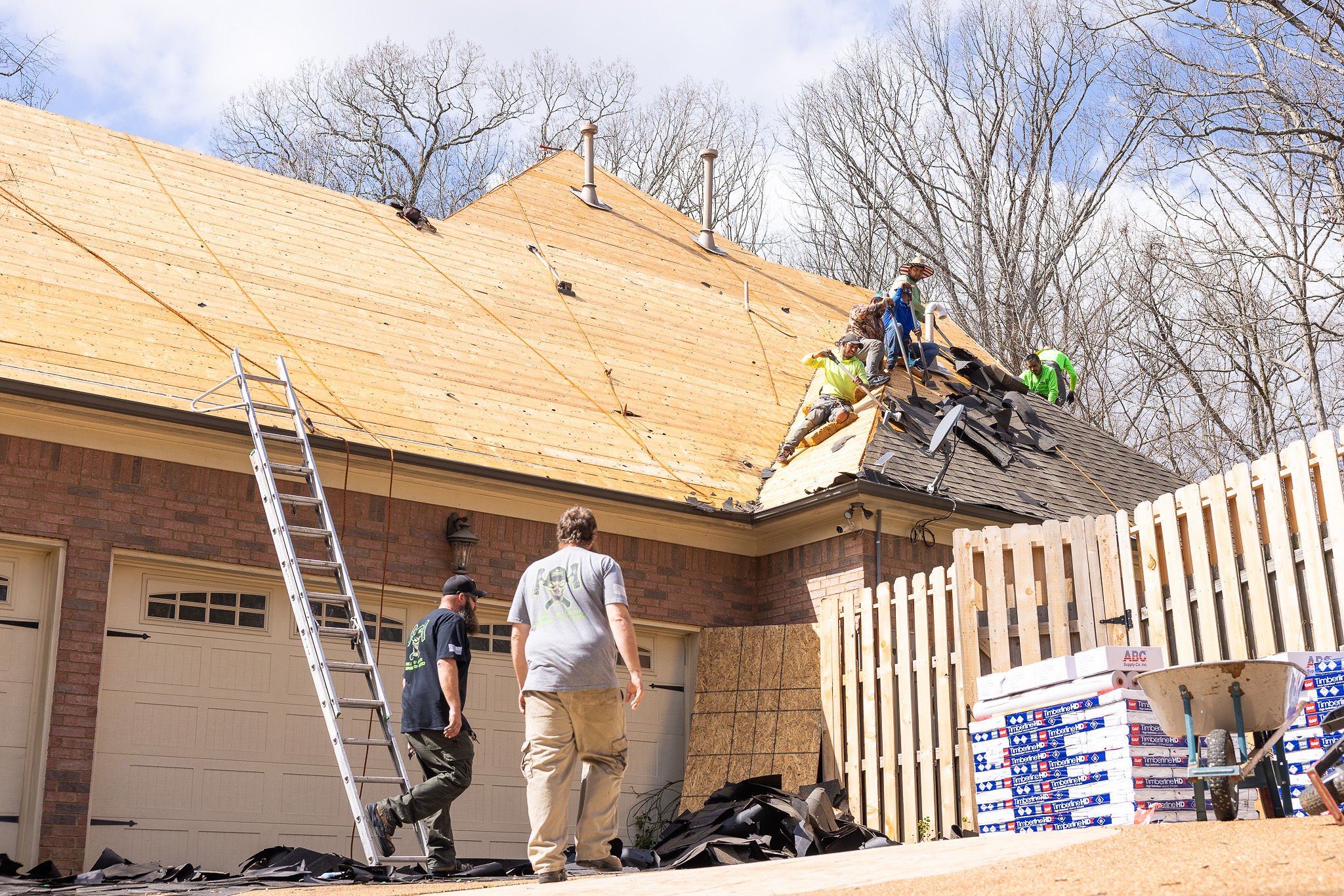
A temporary tarp can reduce direct weather exposure when part of a roof has been opened or damaged, but it is not a permanent repair. The U.S. Army Corps of Engineers describes temporary roof coverings as a bridge until permanent repairs can be arranged.
| A temporary tarp can… | A temporary tarp cannot… |
|---|---|
| Cover an exposed section of roof while permanent work is arranged | Make a damaged roof structurally safe |
| Reduce direct rain and weather exposure | Guarantee that no water will enter |
| Buy time for inspection, estimating and scheduling | Replace a permanent roof repair |
| Help protect the interior when it can be installed safely | Be safely installed in every storm or on every damaged roof |
Why Professional Tarping Is the Safer Default
OSHA’s post-disaster roofing guidance identifies fall hazards, steep or slippery surfaces, deteriorated roof areas and nearby utility lines as concerns during roof inspection, tarping and repair. Those hazards are exactly why a damaged roof is a poor place to improvise. A professional crew can first decide whether the roof can be accessed safely and what kind of temporary protection fits the damage.
Can a Roof Be Tarped While It Is Still Storming?
You can call for emergency service during a storm, but rooftop work may need to wait until conditions are safe enough for access. Lightning, high winds, heavy rain, wet surfaces and damaged decking can all change what crews can safely do. A 24/7 response line means the assessment and dispatch process can start at any time; it does not make unsafe roof conditions safe.
How Long Can a Roof Tarp Stay in Place?
There is no single safe number of days that applies to every tarp. Material, installation, wind, rain, roof shape and the condition of the damaged area all matter. Treat tarping as temporary protection and arrange the permanent repair as soon as practical. If the tarp shifts, tears, or water starts entering again, call the contractor rather than trying to adjust it from the roof yourself.
What Happens When You Call for Emergency Roof Repair?
The goal of an emergency visit is to understand the immediate problem, reduce further weather exposure when conditions allow, and create a plan for the permanent work. Summit’s current emergency service includes 24/7 contact, damage assessment, temporary tarping or board-up when appropriate, and a free, no-obligation inspection with recommendations.
| Step | What happens |
|---|---|
| 1. Contact and triage | You explain what happened, whether water is entering, and whether there are obvious hazards such as fallen debris or a large opening. |
| 2. Safe site assessment | The crew assesses the visible damage and whether the roof can be accessed safely under the current conditions. |
| 3. Temporary stabilization | When appropriate and safe, exposed areas may be tarped or otherwise stabilized to reduce further weather exposure. |
| 4. Inspection and repair plan | The roof is inspected more fully, the damage is documented, and you receive recommendations for repair or replacement based on the actual condition. |
For storm-specific damage and restoration planning, see Summit’s storm damage roof repair service.
What Should You Document for Insurance?
Document the damage before major cleanup or temporary work changes the scene, but only from locations that are safe to access. The National Association of Insurance Commissioners recommends photos or video, a list of damaged property, records of temporary repairs and prompt contact with the insurer after a loss.
- Photos or video of visible roof, exterior and interior damage from safe locations.
- The date and approximate time of the storm, leak or other event.
- Notes about when you first noticed water entry or other damage.
- Receipts and invoices for temporary repairs or emergency services.
- Written estimates, inspection findings and contractor documentation you receive.
- Your claim number and a record of calls, emails and messages with the insurer or agent.
Coverage depends on the cause of loss, your policy, exclusions and deductible. A roofing contractor can document roof conditions and provide repair information; the insurer determines what the policy covers. If you want help organizing the roofing side of the process, review Summit’s roof insurance claim assistance.
What Happens After the Roof Is Stabilized?
A tarp or other temporary measure buys time; it does not finish the job. Once the roof is stable enough to inspect, the focus shifts from stopping immediate exposure to deciding what permanent work is actually needed.
- A fuller inspection identifies the damaged roofing, flashing, decking or related areas that need attention.
- The contractor determines whether targeted repair is practical or whether the damage is broad enough to require replacement.
- You receive an estimate and a plan for the permanent work, including any storm-damage documentation that is relevant.
- The permanent repair or replacement is scheduled, and temporary protection stays in place only as long as needed and serviceable.
A storm does not automatically mean you need a new roof. The repair-versus-replacement decision should come from the inspection and the actual condition of the roofing system. For non-emergency permanent work, see roof repair or storm damage roof repair.
Emergency Roof Repair FAQs
Is a roof leak always an emergency?
Not every roof leak requires emergency response, but an active leak should be dealt with promptly. If water is entering near electrical equipment, the ceiling is sagging, the roof has a large opening, or the building appears unstable, treat safety as the first issue. A dry stain or minor non-active defect can usually be scheduled through standard roof repair.
Can I tarp my roof myself?
A damaged roof is not a good place for trial-and-error work. Wet surfaces, wind, loose roofing, hidden structural damage and nearby power lines can make access dangerous. The safer default is to stay off the roof and have a trained crew assess whether tarping can be done safely.
Can an emergency roofer tarp the roof while it is raining?
You can call while it is raining, but the crew may need to wait for a safe access window before getting onto the roof. Weather, wind, lightning, roof pitch and the condition of the damaged area all affect whether physical work can be done safely.
How long can a temporary roof tarp last?
There is no universal 30-, 60- or 90-day answer. A tarp is temporary protection, and its service life depends on the material, installation, weather and roof conditions. Arrange permanent repair as soon as practical and call the contractor if the tarp moves, tears or starts leaking.
Will homeowners insurance cover emergency roof repair?
It depends on the cause of the damage and the terms of your policy, including exclusions and the deductible. Document the loss, keep receipts for temporary work and contact your insurer or agent promptly. A contractor can provide roof findings and estimates, but cannot guarantee coverage or claim approval.
Should I call a roofer or my insurance company first?
Handle immediate safety hazards first. If the roof is open or actively leaking, you can arrange urgent stabilization while also notifying your insurer promptly and following the policy’s reporting requirements. Keep records of temporary work and ask the insurer what documentation it needs.
What should I do if a tree falls on the roof?
Keep people away from the damaged area and do not climb onto the roof or try to remove the tree yourself. If power lines are down or the building appears unstable, contact emergency services or the utility first. Once the site is safe, a roofer can assess the roof damage and temporary protection needs.
How do I know whether I need roof repair or replacement?
That decision should follow an inspection. A localized problem may be repairable; broad storm damage, compromised decking or an aging roof may change the recommendation. The emergency step is stabilization. The permanent repair decision comes after the full condition is understood.